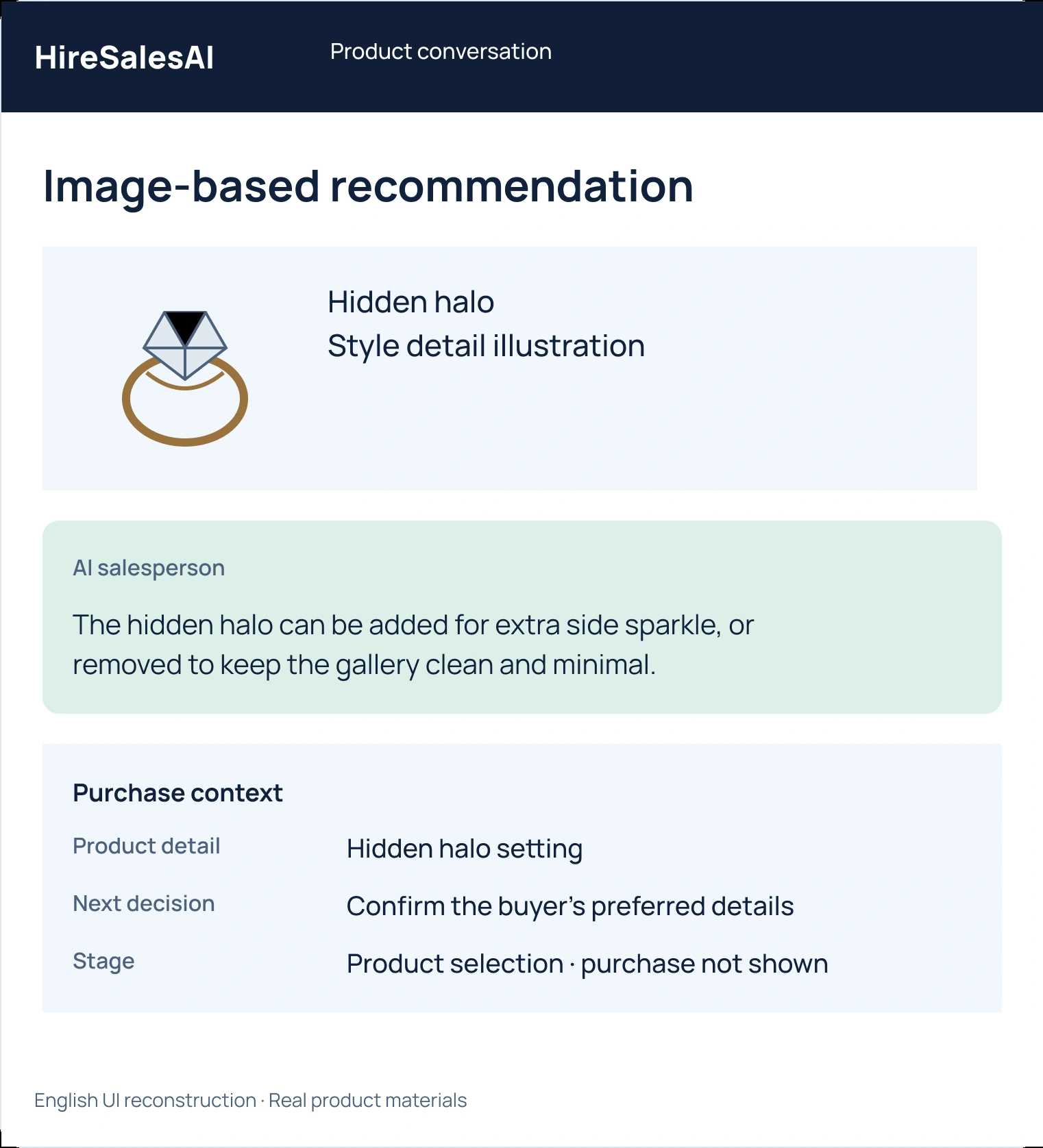
A buyer sends a screenshot and asks whether you have the item. Recognizing its style does not supply every fact needed to recommend or quote it. Similar-looking rings may differ in material, size and finish. A jacket photo can show a cut without proving fabric or performance. These examples are hypothetical.
Visual similarity is one input
Shopify describes visual search as finding products using an image instead of a text query. In a sales conversation, a related-looking item is only part of the job. The recommendation must also fit the buyer's intended use and your actual records.
Respond.io's current agent guide covers catalog matching and clarification for image inquiries. Our recommended boundary is explicit: visible attributes suggest candidates; verified business information establishes specifications and availability.
Use three recommendation labels
- Exact catalog match: an approved identifier or adequate supporting details establishes the item. Check its requested variant separately.
- Similar style: related appearance, with meaningful differences explained.
- Needs confirmation: the image or catalog record is insufficient for a confident recommendation.
These labels describe the recommendation's basis, not model accuracy scores. General resemblance does not establish an exact match. When a source is unclear, identify the uncertainty instead of producing a precise-looking claim.
Prepare the catalog before testing
Each candidate needs an identifier, clear images, variants and verified specifications. Keep approved prices and order conditions separate from descriptions. Availability and delivery information require an appropriate source and freshness check. A promotional photo is not a stock record.
Include similar items with useful differences. Vague descriptions such as “high quality” do not help an agent explain a choice. For jewelry, approved material, sizing and finish information is more useful than a guess based on color. For clothing, distinguish appearance from confirmed fabric or performance.
Ask what changes the match
Hypothetical example: a buyer likes a photographed ring but has not specified size or material. The agent can suggest a similar approved style and ask which specification matters. It should not identify the pictured stone's material or promise an exact reproduction from appearance alone.
Compare two replies to the same photo. “Yes, we have it” hides uncertainty. A reply that explains a similar style's confirmed material and asks for size gives the buyer useful information and shows what remains open. This is a response-quality comparison, not a measured sales result.
Continue within the confirmed facts
Once the fit is sufficiently clear, collect quantity, destination or other inputs required for an authorized quote. An exact custom reproduction, certification or uncertain compatibility claim needs human review. Send the image, candidate products and unresolved questions together so the person can continue.
HireSalesAI combines image-based recommendation with requirement discovery, authorized quoting and follow-up. The product tour includes existing English-redrawn material. This scope does not promise error-free recognition of every photo or complete coverage of every catalog.
Test ambiguity as well as easy matches
Use three constructed tests: a clear catalog image, a similar but materially different item and an image that cannot be identified reliably. Check catalog facts, explained differences and useful clarification or handoff. Record a confirmed match separately from a recommendation, quote or order. An attractive shortlist is not proof of purchase.
Frequently asked questions
Can an AI establish material or certification from a photo alone?
Appearance can suggest candidates. Material and certification claims require verified product information.
How does an exact match differ from a similar style?
An exact match needs supporting identifiers or details. A similar style may differ in material, sizing or other specifications.
When should an image inquiry go to a human?
When an important custom-product, certification or compatibility claim cannot be verified within approved information and authority.
Sources and scope
This guide presents our operating recommendations. Examples are hypothetical. Public source information was checked on 2026-10-10; it is not evidence of a customer outcome.
Discuss your sales workflow
Tell us your product, current inquiry channel and the sales step you want to improve.
Discuss setup on WhatsApp