A wholesale buyer says another supplier is cheaper. Ask which purchase they are comparing before offering a discount. Confirm the product specification, quantity and included costs on both sides; a lower number alone does not show whether the offers solve the same requirement.
This guide is for small exporters and wholesale sales teams responding to a competing quotation. The comparison sheet below is our proposed working method. Its example is hypothetical, and it does not assume that a competing product is inferior or that your price deserves to win.
Find the actual comparison
Start with a neutral question: which part of the offer is making the difference for the buyer? They may mean the unit price, the total amount needed to start, or the cost of getting the goods to a usable destination. Use details they can legitimately share. You do not need a competitor's confidential document to clarify the buyer's requirement.
HubSpot's price-objection guide recommends clarifying what a price is being compared with and exploring the concern before responding. Applying that principle to a wholesale purchase means checking the scope before arguing about value. An unexplained price gap could be real even when both products look similar.
Use a four-row comparison sheet
- Product basis: identify the reference, material, dimensions, variant and required customization. Mark a missing specification as unknown rather than assuming equivalence.
- Quantity basis: compare the same total, assortment and minimums. Identify whether a rate depends on ordering a larger quantity than the buyer currently wants.
- Included costs: separate the product subtotal from the relevant packaging, customization and transport charges. Record the stated currency and exclusions without guessing missing amounts.
- Timing and conditions: identify the requested destination, delivery basis, offer validity and payment conditions that matter to this decision. Have the responsible person verify unsettled terms.
Keep the sheet short enough to use during the conversation. Put the buyer's requirement beside each offer and label the source of every difference. If a row cannot be compared, ask the one question that would resolve it. Do not fill the gap with a claim about the other supplier.
Compare the same hypothetical purchase
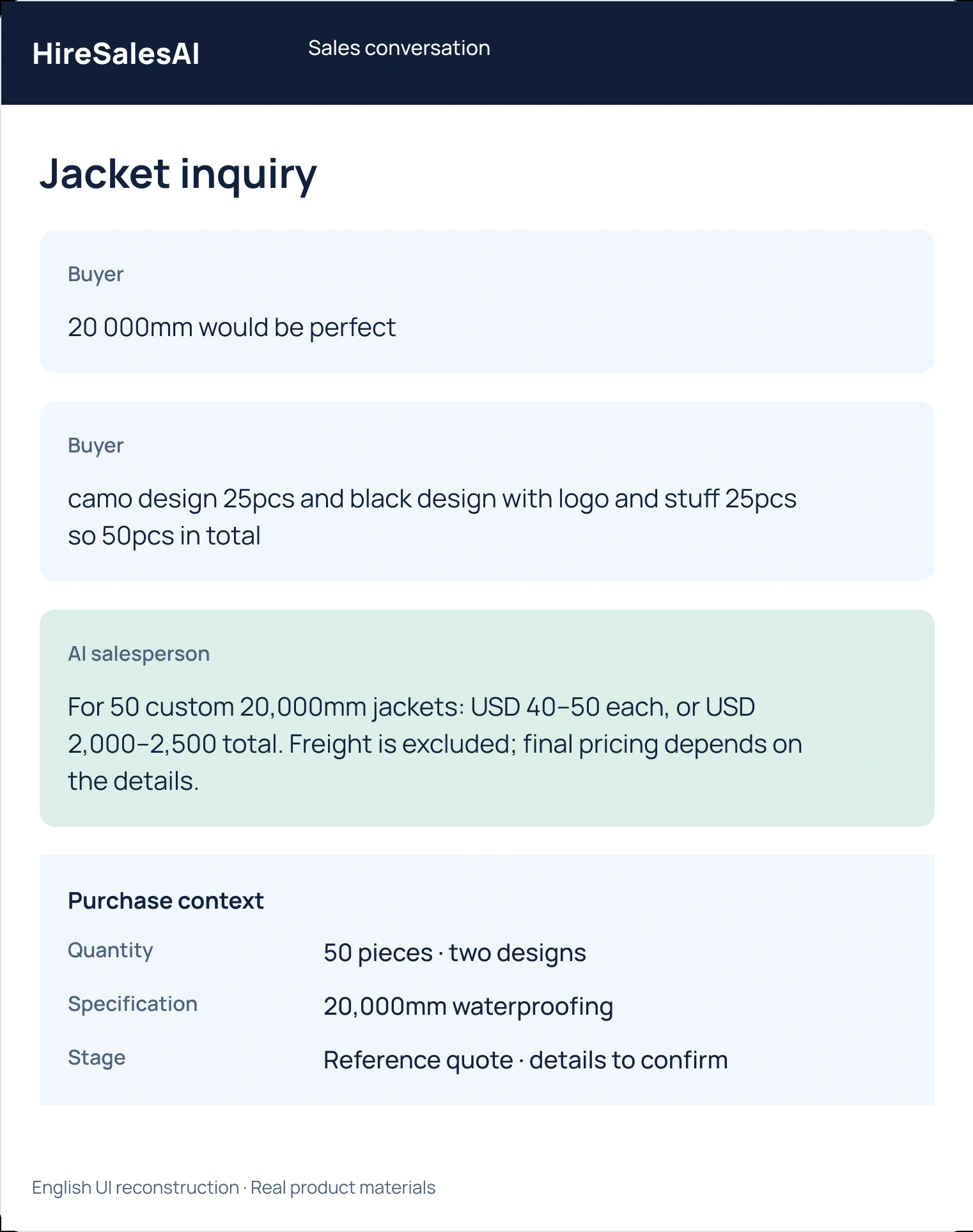
Imagine a retailer evaluating 100 plain jackets in a specified fabric. One quotation covers those 100 units with individual packaging; another covers the same quantity but leaves packaging unconfirmed. The buyer's lower unit price is useful information, but the packaging row is still open. Ask whether individual packaging is required and whether it is included in the competing basis.
If the missing charge is confirmed, compare the resulting scope transparently. If both offers cover the same requirement and the other one remains cheaper, acknowledge that. The next decision is whether your verified differences matter to the buyer or whether an authorized commercial review is appropriate.
Compare two replies to this same inquiry. An immediate discount changes your offer while leaving the comparison unclear. A completed sheet identifies the real gap and the buyer's priority. This is a process-quality comparison, not evidence that asking these questions improves conversion.
Choose the response the evidence supports
Where the scope differs, explain only the confirmed difference and let the buyer judge its relevance. Where the scope is equivalent, ask whether the remaining obstacle is price or another purchasing condition. Where the information is incomplete, identify the open row and offer a proportionate next step instead of demanding more documents.
A possible alternative is a genuinely different configuration that meets the buyer's priority. Describe its tradeoff clearly rather than calling it the same product at a better price. The product-shortlist questions help when the buyer is willing to consider another specification.
Keep pricing authority explicit
HireSalesAI can clarify requirements, explain approved products and handle objections within configured facts and sales authority. Give it the current quotation basis and the person responsible for exceptions. Special pricing or a concession outside its authority needs human approval before it is offered.
For a useful review, record whether the comparison became complete, which difference mattered and what the buyer chose next. Keep a price-review request, a revised offer and a verified order separate. The comparison sheet helps the team make a defensible decision; it does not establish a sale.
Frequently asked questions
Should I immediately match a cheaper wholesale price?
First establish whether the offers cover the same requirement. Any concession should follow current pricing authority and a clear comparison.
Do I need to see the competitor’s full quote?
Ask for the relevant details the buyer can legitimately share. A short confirmation of scope may resolve the comparison without collecting a confidential document.
What if the competing offer really is cheaper for the same scope?
Acknowledge the difference, discuss only verified factors relevant to the buyer, and request an authorized commercial review if appropriate.
Sources and scope
This guide presents our operating recommendations. Examples are hypothetical. Public source information was checked on 2026-10-17; it is not evidence of a customer outcome.
Discuss your sales workflow
Tell us your product, current inquiry channel and the sales step you want to improve.
Discuss setup on WhatsApp