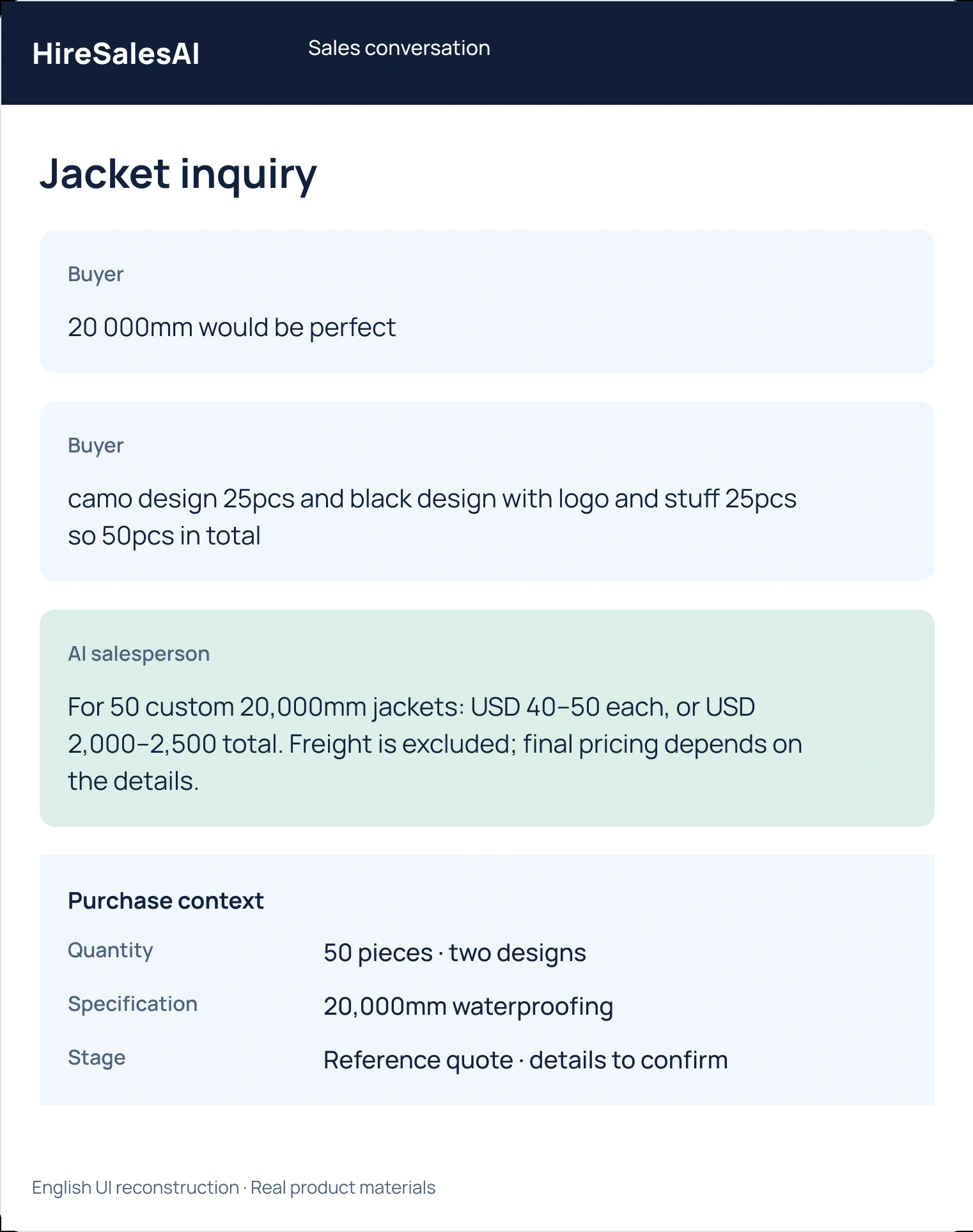
You sent the product details and an approved quote. The buyer read the message, then stopped replying. Sending the same price again may add nothing to the decision. A useful follow-up should find out what remains unresolved: the product choice, the terms or the timing.
This guide is for owners of small wholesale and trading businesses managing existing buyer conversations. It proposes a three-checkpoint method, not a guaranteed reply sequence. HubSpot's public follow-up guide recommends relevant context and a helpful next step; the wholesale checks below are our operating recommendations.
Recover the buying context before writing
Review four fields: the quoted specification, quantity, destination and the last agreed next step. Also check which prices and conditions remain approved. If the buyer already supplied a material or delivery requirement, do not ask for it again. If an approved price has expired, request a current confirmation rather than quietly extending it.
Keep observation separate from interpretation. A message-view indicator is an observation, where the channel provides one. It does not establish that the buyer accepted the quote, compared alternatives or rejected the price. Record the latest confirmed state instead of calling the buyer a lost deal.
Use three checkpoints instead of repeated nudges
- Confirm the decision. Ask whether the buyer is evaluating the quoted item, choosing between alternatives or waiting for someone else's approval. Refer to the exact request so the question is easy to place.
- Clarify the blocker. Ask the question that would change the next action. If the specification is settled but the delivered cost is unclear, clarify the destination or approved shipping basis. Do not assume that every silence requires a discount.
- Agree the next step. Offer one appropriate action: check a specification, explain an approved term, discuss a sample or reconnect at the buyer's chosen time. If the buyer declines or asks to stop, respect that instruction.
These checkpoints describe decisions, not a fixed number of messages. A buyer may resolve them in one reply. Space messages around the buyer's stated timing and the channel's applicable rules. Email follow-up advice should not be treated as permission to send unrestricted messages on another platform.
A hypothetical quote comparison
Suppose a buyer requested 240 tote bags and already specified a delivery destination. The quantity is an illustrative example, not a customer result. An unhelpful follow-up repeats the price and asks for an order immediately. A more useful one asks whether the quoted fabric and packing meet the buyer's resale plan, because that answer determines whether to proceed or compare an approved alternative.
If the buyer then asks for a special concession, the salesperson can explain the currently approved terms and refer the exception to the authorized person. The follow-up should not silently change the price or promise a delivery date that has not been confirmed.
Give an AI sales agent a decision record
For an authorized AI workflow, provide the relevant conversation, approved product information, current quotation rules and the next-action policy. Ask it to identify the known requirement, the unresolved point and one proposed next step. Where a required fact is unavailable, it should ask or escalate rather than manufacture an answer.
HireSalesAI is designed to continue sales discovery, explain approved product and price information, handle objections and progress appropriate next steps. Special pricing, contractual commitments and other exceptions require human approval. Evaluate the actual configured workflow before allowing it to follow up on live conversations.
Check whether follow-up is helping
Track four distinct outcomes: a buyer reply, a clarified requirement, an agreed next step and a verified order or payment. A reply alone is not a sale. Compare conversations at similar stages and keep unresolved or postponed cases visible; a silence should not become a fabricated loss reason.
Review a small authorized sample manually: did each message use existing context, add useful information and stay inside the seller's rules? Fix repeated questions or unauthorized promises before increasing the number of messages. For the adjacent purchase step, see our sample-order workflow.
Frequently asked questions
Should I lower the price when a wholesale buyer stops replying?
First establish what is blocking the decision. Silence alone does not prove a price objection. Explain approved terms and route special concessions for human approval.
How often should I follow up after a quote?
Use the buyer’s agreed timing, business context and applicable channel rules. The checkpoints in this guide organize decisions; they are not a universal daily message schedule.
What should an AI sales agent record after a follow-up?
Keep the confirmed requirement, unresolved point, buyer response and agreed next action separate from any verified order or payment.
Sources and scope
This guide presents our operating recommendations. Examples are hypothetical. Public source information was checked on 2026-10-11; it is not evidence of a customer outcome.
Discuss your sales workflow
Tell us your product, current inquiry channel and the sales step you want to improve.
Discuss setup on WhatsApp